“Is it possible to improve my swimming skills without having a coach standing next to me?”
…the answer is not only yes, in certain situations it may actually be more effective!
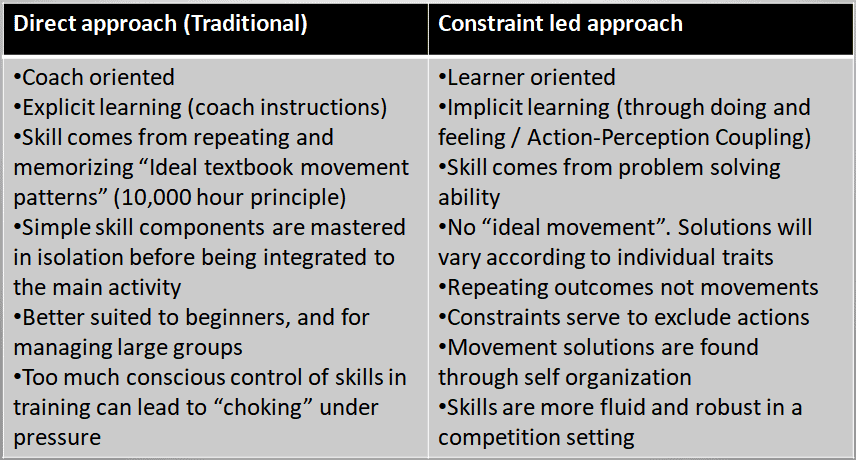
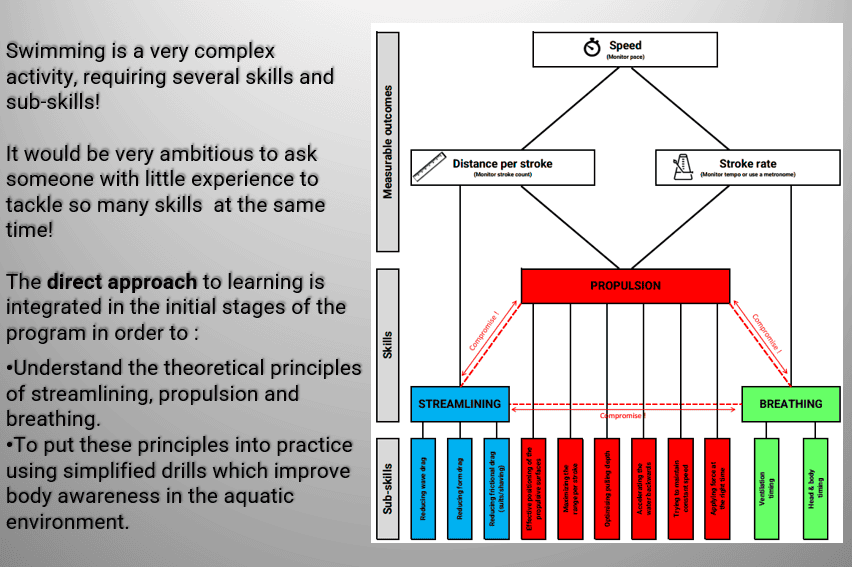
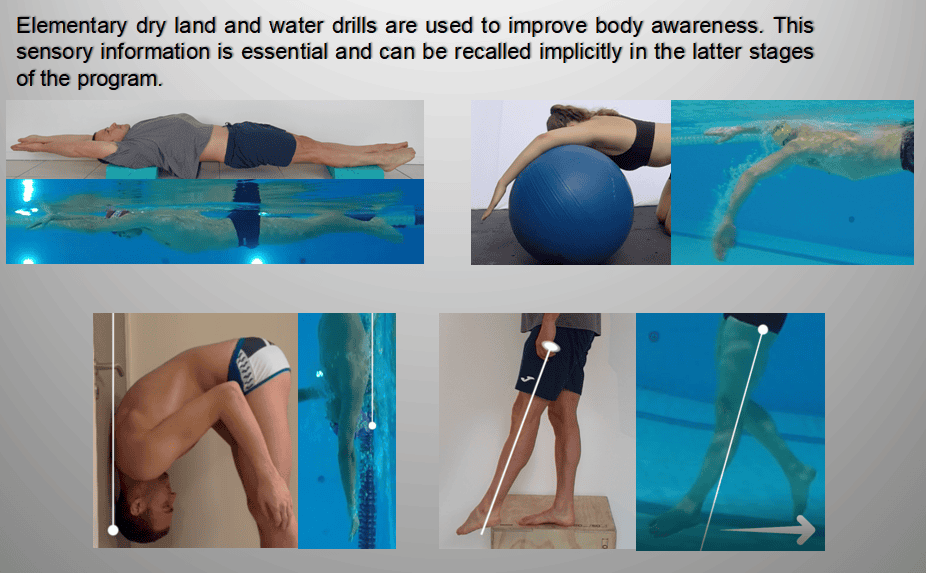
Traditional coaching methods are based on the theory that elite performers produce “ideal movement patterns”. These “ideal” movements should be copied by beginners and repeated relentlessly so that they may be “memorized” by the nervous system (the famous 10 000 hour principle). Skill execution is presented as a “top-down” system where commands are sent from the cognitive areas of the brain to the muscles. This has promoted the idea that the role of the coach is to direct his pupils giving them explicit instructions on performing skills and correcting them with feedback when they commit errors. This form of teaching is known as “the direct approach” and although it may be effective in the very early stages of learning it has several drawbacks later on…
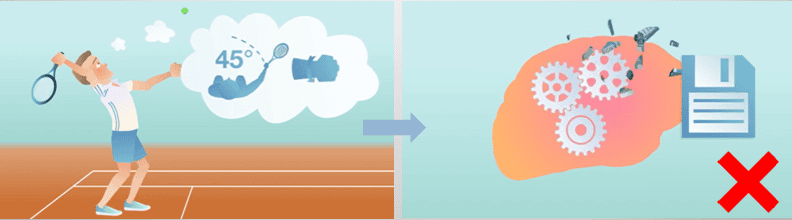
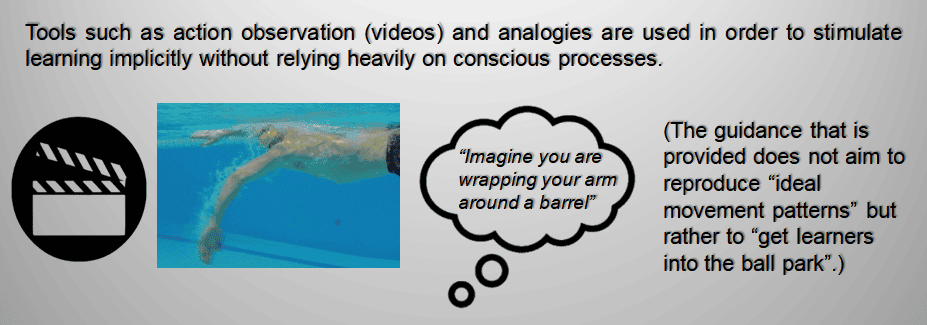
Explicit instruction pushes the learner to use the conscious areas of the brain to perform movements and the information is stored in the explicit long term memory areas of the brain. The problem with this method is that the subject will develop a tendency to consciously attend to the rules and knowledge that underpin the skill in an attempt to control the quality of performance. In competition this can reduce the performance of an expert performer to the standard of a relative beginner, a term known as “choking under pressure” or “reinvestment”.
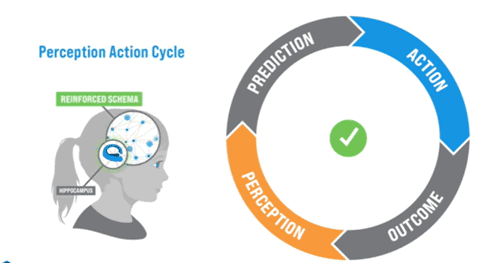
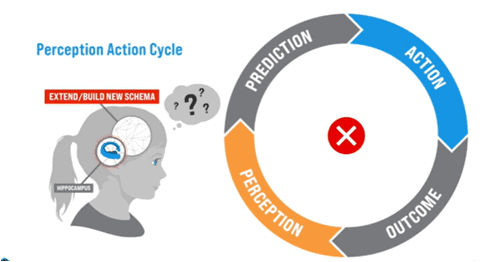
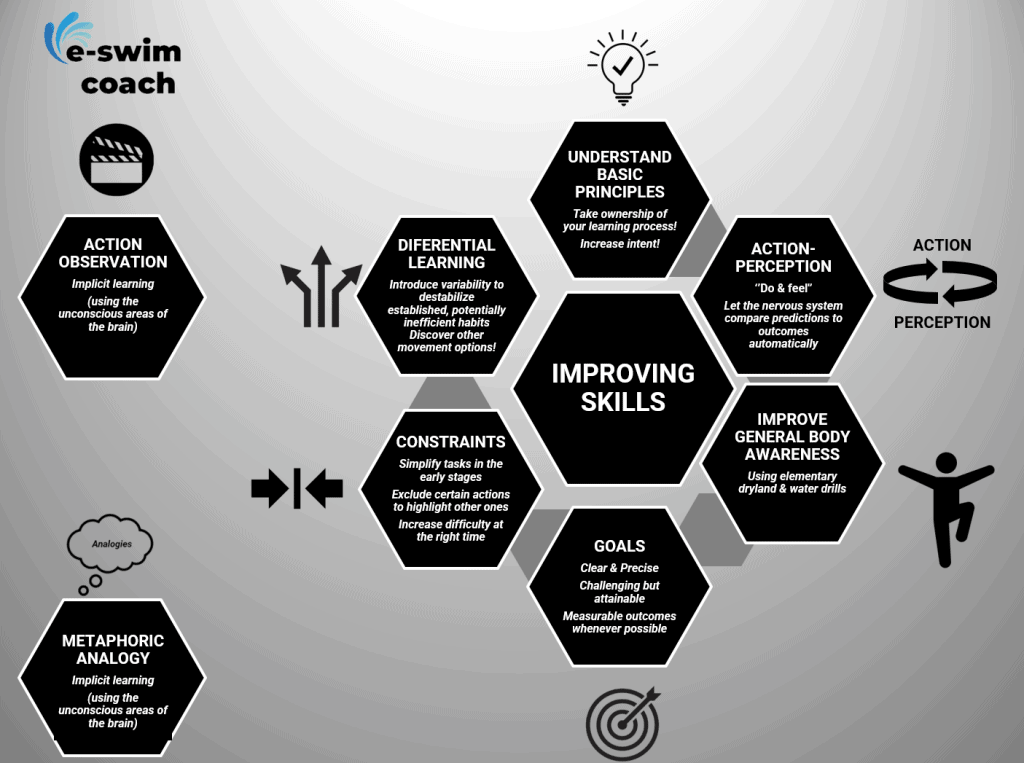
Researchers now know that learning a skill effectively occurs in the unconscious areas of the brain and that the information is stored automatically in our implicit long term memory. This is a process known as “action perception coupling”, where our nervous system automatically makes connections between what we see or feel with the results of our actions every time we try moving (without any need for processing!). Autonomous learners are better equipped to solve the unexpected problems and challenges they encounter in a real life setting or in a competition.
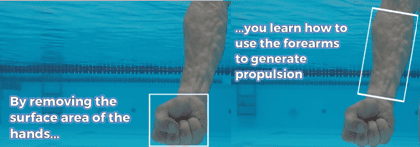
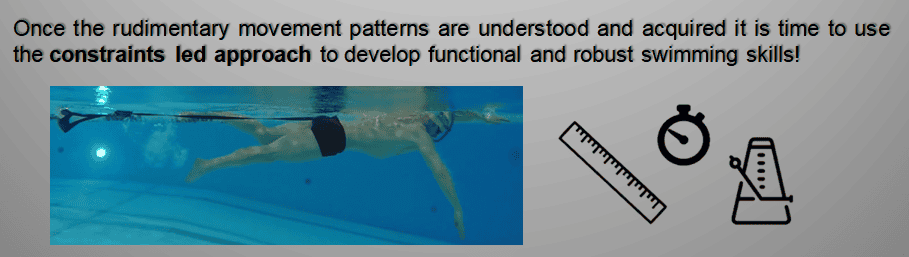
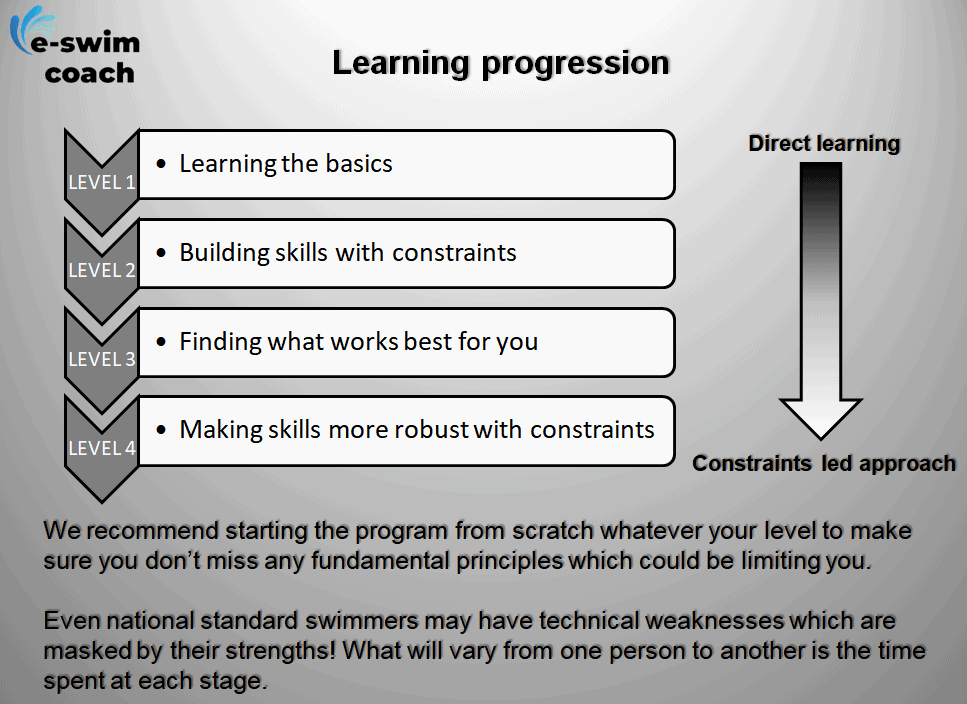
These findings have given birth to the “constraints led approach” to learning skills. Here movement solutions are found through self organization. There are no “ideal movements” and solutions vary according to our own individual traits (height, weight, buoyancy, segment proportions, muscle fiber type etc) as well as fluctuations in the environment. Skill is not movement memorization. The emphasis is not on repeating movements but on repeating outcomes. Real skills come from problem solving ability! The role of the coach is to create specific problems (constraints) and to let the learner find the best solutions autonomously through doing and feeling. A good program provides a wide variety of constraints to enhance adaptability and to make skills “bulletproof”. The art of good coaching is to challenge the athlete with constraints that are demanding but attainable…what, when and how often are the keys of an effective program.
A recent study* aimed to explore the experiential knowledge and preferred training approaches of 20 elite Australian swimming coaches in regards to general skill development .
The study revealed that the most common training practices employed to improve skill learning included :
Task decomposition techniques (direct approach).
Practices and tasks that are specific/representative to the intended performance outcomes.
Use of constraints manipulation in the practice design.
The best swimming coaches seem to mix both traditional and contemporary skill acquisition theories in their training prescriptions.
(*Victoria Brackley, Sian Barris, Elaine Tor & Damian Farrow (2020) Coaches’ perspective towards skill acquisition in swimming: What practice approaches are typically applied in training?, Journal of Sports Sciences, 38:22, 2532-2542)